Savich’s Porsche
Point BlankSavich’s Porsche is Dillon Savich’s cherished red car, given to him by his father for his twenty-first birthday. At the Bonhomie Club, that personal possession becomes the target of a bomb attack: recognizing the danger, Savich warns the people around it, but the car explodes and throws those closest to it onto the pavement. Its transformation from prized possession to wreckage marks the sudden cost of Moses Grace’s attack and places Savich among the people trying to save the injured.
Origin and Personal Meaning
The car’s significance to Savich is explicit and unusually personal. His father gave it to him on his twenty-first birthday, and Savich describes it as his pride and joy. That history makes its eventual destruction more than the loss of a vehicle: the object carries a connection to his father and to an important birthday, then is reduced to twisted metal in the course of Savich’s work.
The Porsche is also a familiar presence in the relationship between Savich and Lacey Sherlock. When Ruth Warnecki guesses that the couple have had a serious argument, she jokingly asks whether Sherlock drove the sacred Porsche. Sherlock answers that every time she has driven it, she has received a speeding ticket. The exchange treats the car as something Savich guards and Sherlock teases him about; its ordinary place in their banter contrasts with the danger it later attracts.
At the Bonhomie Club
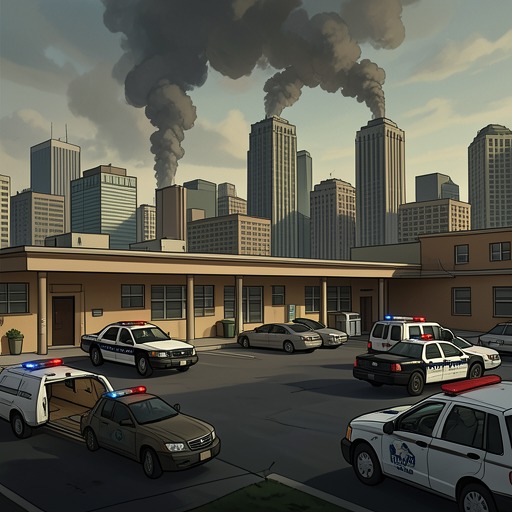
After an explosion at the club, Savich drives the Porsche to the emergency scene on Houtton Street and parks directly in front, in a space the police have kept clear. The street is crowded with club patrons, first responders, reporters, and bystanders. Thick black smoke, fear of a stampede, and the work of getting people out have already made the scene chaotic. The car is therefore placed in the middle of a dense crowd, not apart from the danger.
The threat becomes clear when Sherlock and the officers with her fire toward a second-floor window. While others are focused on the building, Savich looks back at the Porsche and recalls the bomb Moses Grace left at Hooter’s Motel. He understands that the car is the immediate danger. He calls for everyone to run and get away from it; Fortnoy and Millbray join the warning, although they do not yet understand why he is shouting.
The Explosion and Its Consequences
The warning gives the people gathered around the Porsche a chance to scatter. The bomb nevertheless detonates, engulfing the car in flame. The blast’s concussion and heat knock the closest people down or hurl them into one another. Savich runs toward the victims with the police officers around him, kneels beside a motionless young woman, and checks her pulse. She is alive, and he calls for a paramedic. Firefighters then move toward the burning car and help carry people to safety.
The explosion leaves the surrounding scene defined by urgent rescue rather than the car’s former usefulness. Screams, moans, and weeping accompany the effort to control the flames and panic. The Porsche has become both the instrument of the attack and the obstacle responders must contend with as they reach the injured.
Wreckage and Narrative Significance
Afterward, Savich sees what remains of the car: twisted metal, black smoke, and a plate-size piece of red metal lying askew at the sidewalk’s edge. The vivid red that identifies the Porsche is now only a fragment among the wreckage. Its destruction is concrete evidence of the attack’s force, while the scattered victims and rescue effort show its human consequences.
The car’s role changes sharply across these scenes. It begins as a treasured gift and a source of teasing between Savich and Sherlock; at the club it is an everyday object exposed to a crowd; moments later it is a bomb target. Savich’s recognition of the danger makes the Porsche the point at which his attention shifts from the apparent gun threat at the building to the people in the street. When Sherlock draws close after the blast and Savich feels something wet beneath his hand, his alarm introduces another immediate uncertainty. The passage ends on that discovery, with the wrecked car behind them and the condition of the people beside it still at stake.